Antacids
Also called Rennie, Gaviscon, Maalox, Bisodol, Milk of Magnesia
Shops and pharmaciesAntacids are medicines that neutralise acid in your stomach. They ease indigestion and heartburn for a few hours, but they do not treat the cause. You can buy them without a prescription.
When to see a GP ↓Brands sold in Ireland
- Other brands
- RennieGavisconMaaloxBisodolMilk of Magnesia
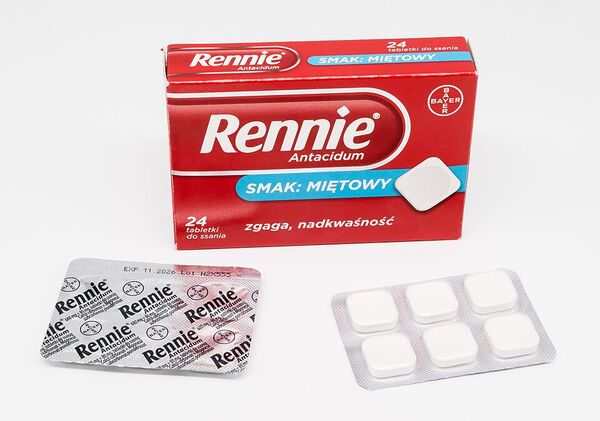
Photos from Wikimedia Commons. Packs sold in Ireland may look different.
As listed by the HSE. The same medicine can be sold under other names; the pharmacist can tell you.
Get help urgently
- Call 112 or 999 or go to an emergency department straight away if you get signs of a serious allergic reaction: a rash or itching, swelling of your face, lips, tongue or throat, or shortness of breath or difficulty breathing. Stop taking the antacid immediately.
What antacids are for
- Antacids counteract the acid in your stomach.
- They may help with indigestion, heartburn, acid reflux or GORD, a stomach ulcer, and gastritis (an inflamed stomach lining).
- They come as a liquid or chewable tablets.
- Some also contain alginate, which coats your food pipe with a protective layer, or simeticone, which helps with bloating and wind.
- They relieve symptoms for a few hours but do not treat the underlying cause.
Who can and cannot take them
- Antacids are safe for most people, but not everyone.
- Some are not recommended for children. Check with a pharmacist or GP before giving one to a child aged 12 or under.
- Check first if you take other medicines, or have liver disease, kidney disease or heart failure.
- Also check if you need to limit salt in your diet, for example because of high blood pressure, or if you have high calcium or low phosphate in your blood.
- Most are safe in pregnancy and breastfeeding, but talk to a pharmacist or GP first.
How and when to take them
- Read the packet or leaflet to see how much to take and how often. It depends on the type.
- Take them when you have symptoms or expect them soon.
- For most people the best time is with or soon after meals, and before bed.
- Taking them with food may make the effect last longer.
- If you take too much and start to feel unwell, talk to your GP or pharmacist.
- Do not take them for a long time. It may hide a more serious problem. Talk to your GP if you use them often.
Side effects
- Antacids do not have many side effects. Use them only from time to time.
- Diarrhoea: drink lots of water. Check with a pharmacist or GP before taking anything for it.
- Constipation: eat more fibre, drink plenty of water and be more active.
- Wind: avoid foods like lentils, peas, beans and onions, and eat smaller meals more slowly.
- Stomach cramps: rest, eat slowly and try a covered hot water bottle on your stomach.
- Feeling or being sick: keep to simple meals and sip water. Check with a pharmacist or GP before taking anything for vomiting.
- Severe diarrhoea or being sick may stop contraceptive pills working. Check the pill packet for advice.
Other medicines and alcohol
- Antacids can change how well other medicines work, and may stop them working properly.
- Do not take other medicines within 2 to 4 hours of an antacid.
- Talk to a pharmacist or GP if you take other medicines or supplements.
- You can drink alcohol, but it can irritate your stomach and make symptoms worse.
A pharmacist can help
A pharmacist can advise whether an antacid suits you or your child (aged 12 or under), including in pregnancy or breastfeeding or if you take other medicines. They can also help with side effects such as diarrhoea, constipation, stomach pain, vomiting or signs of dehydration.
Common questions
What are antacids used for?+
They ease indigestion, heartburn, acid reflux and symptoms of a stomach ulcer or gastritis. They relieve symptoms for a few hours but do not treat the cause.
When is the best time to take antacids?+
Take them when you have symptoms or expect them soon. For most people that is with or soon after meals, and before bed.
Can I take antacids every day?+
Long-term use is not recommended, as it may hide a more serious problem. If you are taking them often, talk to your GP.
Can I drink alcohol while taking antacids?+
Yes, but alcohol can irritate your stomach and make your symptoms worse.
Can I take antacids with other medicines?+
Antacids can affect how other medicines work. Do not take other medicines within 2 to 4 hours of an antacid, and ask a pharmacist or GP if you are unsure.
Are antacids safe in pregnancy?+
Most are safe in pregnancy and breastfeeding, but talk to a pharmacist or GP before taking them.
Based on the HSE’s guidance, read the full HSE page. Summarised in plain words with the help of AI and checked against that page on 25 October 2026. Not medical advice: if you are worried, contact a GP or pharmacist.