NSAIDs
Also called Non-steroidal anti-inflammatory drugs, Ibuprofen (Nurofen, Advil, Brufen, Brupro, Buplex, Easofen, Ibugel), Naproxen (Naprosyn), Diclofenac (Diclac, Difene, Voltarol, Fenopine), Etofenamate (Etoflam), Celecoxib (Celebrex), Mefenamic acid (Mefac, Ponstan, Melfen), Etoricoxib (Arcoxia), Aspirin for pain relief (Disprin), Phorpain, Nurofen Plus (ibuprofen with codeine)
Some types need a prescriptionNSAIDs are medicines that relieve pain, reduce swelling and bring down a high temperature. Some are sold in pharmacies and others need a prescription. They are not suitable for everyone, so check with a GP or pharmacist first.
When to see a GP ↓Brands sold in Ireland
- Ibuprofen
- NurofenNurofen Plus
- Naproxen
- Naprosyn
- Diclofenac
- DiclacDifeneVoltarol
- Etofenamate
- Etoflam
- Celecoxib
- Celebrex
- Mefenamic acid
- MefacPonstan
- Etoricoxib
- Arcoxia
- Aspirin
- Disprin
- Other brands
- AdvilBrufenBruproBuplexEasofenIbugelFenopineMelfenPhorpain
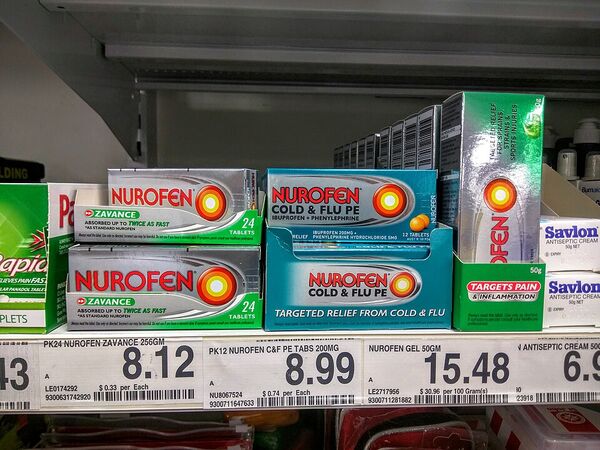
Photos from Wikimedia Commons. Packs sold in Ireland may look different.
As listed by the HSE. The same medicine can be sold under other names; the pharmacist can tell you.
Get help urgently
- Call 112 or 999 or go to an emergency department if you have severe chest or stomach pain.
- Call 112 or 999 or go to an emergency department if you have weakness on one side of your body, which can be a sign of a stroke.
- Call 112 or 999 or go to an emergency department if you have difficulty breathing or asthma symptoms that get worse.
- Call 112 or 999 or go to an emergency department for a red, peeling, flaking or blistering rash, or swelling of your mouth, face, lips, tongue or throat.
- If you have taken too much, call 112 or 999 or go to an emergency department if you have fits or seizures, difficulty breathing or are losing consciousness.
- Do not drive yourself to the emergency department. Get someone else to drive you or call an ambulance, and bring the packet or leaflet and any remaining medicine.
What NSAIDs are for
- They relieve pain, reduce swelling and bring down a high temperature.
- They are often used for headaches, painful periods, sprains and strains, colds and flu, and long-term pain such as arthritis.
- They ease pain by changing how your body responds to it.
- They come as tablets, capsules, creams, gels, injections, plasters and suppositories.
- Some, such as ibuprofen and diclofenac gel, are available from a pharmacy without a prescription. Others need a prescription.
Who should check first
- Ask a pharmacist or doctor before taking an NSAID if you are 65 or older, or have had an allergic reaction to an NSAID or any medicine.
- Check first if you take other medicines, or have high blood pressure, diabetes, high cholesterol or asthma.
- Check first if you have liver, kidney or heart problems, or have had stomach ulcers or bowel problems.
- Talk to your GP or pharmacist if you are pregnant, trying to get pregnant or breastfeeding. NSAIDs are not normally recommended in pregnancy unless a doctor prescribes them.
- Do not give ibuprofen to an adult or child with chickenpox. It can cause a serious skin reaction.
- Ask a pharmacist or GP before giving an NSAID to a child. Some are not suitable for children.
How to take them
- Follow the label or leaflet for how much to take. It is best to take the lowest amount that works for the shortest time.
- If you still need an NSAID after 10 days, check with your GP. Some mixed medicines can only be taken for up to 3 days.
- Take tablets and capsules with a meal, snack or a drink of milk or water to help prevent an upset stomach. Swallow them whole.
- For liquids, shake the bottle and use the syringe or spoon in the pack, not a kitchen teaspoon.
- Rub gels and creams gently into the sore area and wash your hands afterwards.
- If you miss a dose, take it when you remember unless it is nearly time for the next one. Never take a double dose.
Codeine combination tablets
- Tablets that combine an NSAID with codeine, such as Nurofen Plus, are available without a prescription.
- Do not take them for more than 3 days. Talk to your GP if the pain has not improved after 3 days.
- Codeine can cause addiction or dependence if taken continuously for more than 3 days.
- Signs of addiction include finding it hard to stop and feeling you need it more often than necessary.
- Stopping suddenly can cause withdrawal, such as feeling anxious or agitated, panic attacks, palpitations, poor sleep, shaking, sweating, body aches or restlessness.
- Contact your GP urgently if you are worried about addiction, need help or want to stop.
Common side effects
- Common side effects include headache, dizziness, wind, feeling or being sick, tiredness, blurred vision, diarrhoea, indigestion and ringing in the ears.
- Taking your NSAID with food or milk can help with feeling sick.
- If you feel dizzy, tired or sleepy, or your vision is blurred, do not drive, cycle or use tools or machines.
- If you get repeated indigestion, stop the medicine and contact your GP or pharmacist. An antacid may ease it.
- If you are being sick or have severe diarrhoea, your contraceptive pill may not protect you from pregnancy. Check the pill packet.
- Talk to your GP or pharmacist if side effects bother you or do not go away.
Other medicines, food and alcohol
- You do not usually need to avoid any foods.
- It is usually safe to drink alcohol, but alcohol can irritate your stomach when you take an NSAID. Keep to the recommended weekly limit.
- Tell your GP or pharmacist about all your medicines, including herbal remedies, vitamins and supplements.
- Get medical advice first if you take another NSAID, steroids such as prednisolone, or blood thinners such as low-dose aspirin or warfarin.
- Also check if you take medicines for diabetes (including metformin), depression, heart problems, seizures, infections or high blood pressure, among others listed in the leaflet.
A pharmacist can help
A pharmacist can tell you whether an NSAID is suitable for you or your child, and can check it against your other medicines. They can supply a plastic oral syringe or spoon if your liquid medicine did not come with one. They can also suggest medicines available without a prescription for wind, and can advise on another painkiller such as paracetamol if NSAIDs do not work.
Common questions
Can I buy NSAIDs without a prescription in Ireland?+
Some, such as ibuprofen and diclofenac gel, are available from a pharmacy without a prescription. Others need a prescription from a doctor.
How long do NSAIDs take to work?+
Tablets and capsules usually start to work within 1 hour. Gels and creams may take 1 to 2 days, and up to 7 days for the full effect in arthritis.
Should I take NSAIDs with food?+
Yes. Take tablets or capsules with a meal, snack or a drink of milk or water. This helps prevent an upset stomach.
Can I drink alcohol while taking NSAIDs?+
It is usually safe, but alcohol can irritate your stomach when you take an NSAID. Keep to the recommended weekly amount of alcohol.
Can I give ibuprofen to a child with chickenpox?+
No. Do not give ibuprofen to an adult or child with chickenpox because it can cause a serious skin reaction.
What can I take if NSAIDs do not work?+
Talk to a pharmacist or GP about trying another painkiller such as paracetamol. If that does not help, your GP may prescribe something stronger or suggest other treatment such as physiotherapy.
Based on the HSE’s guidance, read the full HSE page. Summarised in plain words with the help of AI and checked against that page on 25 October 2026. Not medical advice: if you are worried, contact a GP or pharmacist.