Antifungal medicines
Also called clotrimazole (Canesten), miconazole (Daktarin), terbinafine (Lamisil, Naildem, Terbasil), fluconazole (Diflucan, Flucol), ketoconazole (Nizoral), itraconazole (Sporanox), amphotericin
Some types need a prescriptionAntifungal medicines treat fungal infections, which mostly affect the skin, hair and nails. Some need a prescription and some you can buy from a pharmacy. Ask a pharmacist or GP which one is right for you.
When to see a GP ↓Brands sold in Ireland
- Clotrimazole
- Canesten
- Miconazole
- Daktarin
- Terbinafine
- LamisilNaildemTerbasil
- Fluconazole
- DiflucanFlucol
- Ketoconazole
- Nizoral
- Itraconazole
- Sporanox
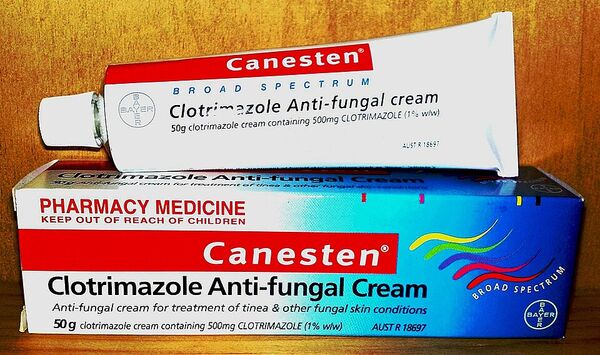
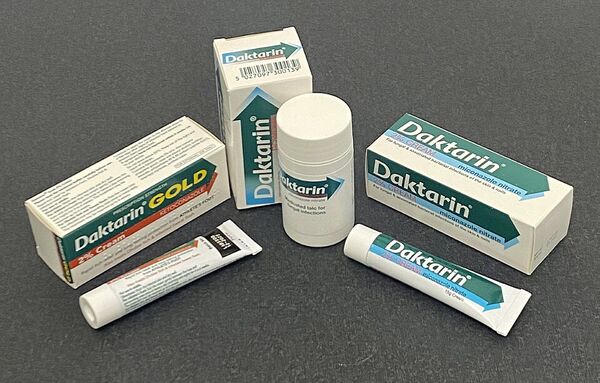
Photos from Wikimedia Commons. Packs sold in Ireland may look different.
As listed by the HSE. The same medicine can be sold under other names; the pharmacist can tell you.
Get help urgently
- Call 112 or 999 or go to your nearest emergency department if you have taken an antifungal medicine and have difficulty breathing.
- Call 112 or 999 or go to your nearest emergency department if your face, neck or tongue swell after taking one.
What antifungal medicines are for
- They treat fungal infections, which usually affect the skin, hair and nails.
- Common examples are ringworm, athlete's foot, fungal nail infection, vaginal thrush and some kinds of severe dandruff.
- They either kill the fungal cells or stop them growing and multiplying.
- Some fungal infections grow inside the body and must be treated in hospital.
- You are more at risk of a serious fungal infection if your immune system is weak.
Types of antifungal medicine
- They come as capsules, tablets or liquids.
- They also come as creams, ointments, gels, shampoos and powders.
- A pessary is a small, soft tablet that you put inside the vagina.
- Some are given as an injection.
- Your patient information leaflet has details for your type. You can find a digital version online.
Who should check first
- Check with your GP or pharmacist before taking one if you have other medical conditions or allergies.
- Check too if you take other medicines.
- Check if you are pregnant, trying to get pregnant or breastfeeding.
- Many antifungal medicines are not safe in pregnancy or while breastfeeding.
- Children and babies can take some. For example, miconazole oral gel can treat oral thrush in babies from 4 months. Ask a pharmacist or GP first.
How to take them
- Take your medicine the way your pharmacist or GP tells you.
- Read the leaflet that comes with it for how to take it.
- Children of different ages usually need different amounts, so ask a pharmacist or GP.
- If you take too much, talk to your pharmacist or GP. They may send you to the emergency department.
- If you go to the emergency department, bring the packet or leaflet and any medicine left.
Common side effects
- Side effects are usually mild and short-lived.
- For itching, burning or redness, hold something cool on the skin and use an unperfumed moisturiser. Pat your skin instead of scratching.
- For feeling sick, keep to simple meals and avoid rich or spicy food. Taking the medicine after a meal or snack may help.
- For vomiting or diarrhoea, sip fluids often to avoid dehydration. Do not take other diarrhoea medicines without asking a pharmacist or doctor.
- If you are sick or have severe diarrhoea for more than 24 hours, your contraceptive pill may not protect you. Check the pill packet.
- For a rash, try not to scratch. If it does not clear in a few days, speak to your pharmacist or GP.
Serious side effects
- A severe skin reaction, such as peeling or blistering skin, needs a GP straight away.
- Possible liver damage is very rare. Signs include vomiting, feeling sick, loss of appetite, yellow skin or eyes, dark pee, pale poo, tiredness or weakness.
- Stop the medicine if you have any of these severe side effects.
- You can report suspected side effects to the HPRA.
A pharmacist can help
["Ask a pharmacist if you think you have a fungal infection. They will tell you which antifungal medicine to take.","Some antifungal medicines can be bought at a pharmacy without a prescription.","A pharmacist can advise if you have other conditions, allergies or other medicines, or if you are pregnant or breastfeeding.","Ask them if you take too much, or if you have a lot of stomach pain or a rash that does not clear."]
Common questions
Do I need a prescription for antifungal medicine?+
You need a prescription for some antifungal medicines. You can get others from a pharmacy without one.
What are antifungal medicines used for?+
They treat fungal infections such as ringworm, athlete's foot, fungal nail infection, vaginal thrush and some kinds of severe dandruff.
Can I take antifungal medicine when pregnant or breastfeeding?+
Many antifungal medicines are not safe during pregnancy or breastfeeding. Check with your GP or pharmacist first.
What are the side effects of antifungal medicines?+
Side effects are usually mild and short-lived. They can include itching, burning, redness, feeling or being sick, stomach pain, diarrhoea and a rash.
What should I do if I take too much antifungal medicine?+
Talk to your pharmacist or GP. They may tell you to go to the emergency department, where you should bring the packet or leaflet and any medicine left.
Based on the HSE’s guidance, read the full HSE page. Summarised in plain words with the help of AI and checked against that page on 25 October 2026. Not medical advice: if you are worried, contact a GP or pharmacist.